Thursday, June 27, 2013

Falls into coma in USA, wakes up in Poland


New Jersey man falls into coma, wakes up in Poland
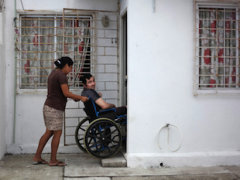


In March, Jacinto Rodrieguez found himself deported to Mexico after falling unconscious in an Iowa hospital. 
Here is a scary story: you sought treatment in another country far away from home and something went awry during your surgery and you went into a coma and when you woke up you are in a different country, not necessarily yours, surrounded by unfamiliar faces who might or might not be friendly. You thought it was just a nightmare until you realize it was not.
Sixty-nine-year-old Wladyslaw Haniszewski had lived in the U.S. for about 30 years. But when the New Jersey resident fell into a coma he awoke to find himself in his native country of Poland .

Click Here!


The New York Daily News reports that Haniszewski fell victim to a growing phenomenon in which uninsured immigrants are deported by U.S. hospitals that do not want to get stuck paying for their treatment.
“Imagine being carted around like a sack of potatoes," said Polish Consul General Ewa Junczyk-Ziomecka, who argues that Haniszewski was placed on a chartered flight while still unconscious, never giving his consent to being shipped to a hospital in a country he had not lived in for decades.


The practice of medical repatriation has reportedly become increasingly common. One immigration advocacy group told The Associated Press in April that it has documented at least 800 cases of individuals being deported from hospitals without consent over the past six years in at least 15 states. However, the actual number is believed to be much higher because of the significant number of cases that go unreported.

"It really is a Catch-22 for us," Dr. Mark Purtle, vice president of Medical Affairs for Iowa Health System, said at the time. "This is the area that the federal government, the state, everybody says we're not paying for the undocumented."
There is an ongoing debate over the legality and morality of medical repatriation.


Under U.S. law, hospitals are required to gain patient consent, from either the individual directly or an immediate family member, before having the individual deported. The federal government is not directly involved in the cases and does not pay for the cost of deportation. In April, "Colbert Report" host Stephen Colbert weighed in on the controversy, saying sarcastically, "It's totally unregulated, so hospitals avoid all the red tape usually involved in shipping the unconscious."Haniszewski has reportedly fallen on hard times in recent years. Friends tell the Daily News that he recently lost his apartment and job, and was forced to relocate to a shelter.

The Robert Wood Johnson University Hospital in New Brunswick is defending its actions, saying it took the necessary precautions before placing Haniszewski on an outbound flight.

“The individual was informed regarding his discharge plan and care,” said hospital spokesman Peter Haigney. “As the hospital's understanding of the facts differs from the published reports, we are conducting a thorough review of the procedures and communications surrounding this gentleman's care.”
However, Junczyk-Ziomecka contests the theory that Haniszewski consented to the move or was even informed of the decision. After all, he was still in a coma when he arrived in Poland and even now is unable to verbally communicate with hospital staff. He’s also estranged from his two daughters, who live in Poland.
"He can smile from time to time, but he is unable to communicate," Junczyk-Ziomecka told the Daily News.

“It’s an incredibly disturbing case,” Lori Nessel, director of the Center for Social Justice at Seton Hall University School of Law, told the Daily News. “This kind of action seems clearly illegal and also not ethical, but it’s hard to bring a legal action.”


Tuesday, June 11, 2013

Zombies: 'Walking Corpse Syndrome'


Warm Bodies: Man Describes Life With 'Walking Corpse Syndrome'


A man's account of living with Cotard's syndrome offers a chilling look at a rare condition that has patients convinced they're zombies.

The man, identified only as Graham in an interview with New Scientist, said he awoke from a suicide attempt feeling as though his brain were dead.
"I just felt like my brain didn't exist anymore," Graham told the magazine, recalling his bizarre state of consciousness after surviving an attempt to electrocute himself in his bathtub. "I kept on telling the doctors that the tablets weren't going to do me any good, because I didn't have a brain. I'd fried it in the bath."


Graham was diagnosed with Cotard's syndrome, a mysterious psychiatric condition marked by "the fixed and unshakable belief that one has lost organs, blood or body parts" or has no soul, according to a definition in the journal Neurology.
"I lost my sense of smell and taste. I didn't need to eat, or speak or do anything," Graham told New Scientist. "I ended up spending time in the graveyard because that was the closest I could get to death."
What little is known about Cotard's syndrome has come from rare case reports dating back to 1882. But Graham's recent diagnosis gave doctors an opportunity to look inside the brain of a Cotard's patient.
What they found was extraordinary.
"I've been analyzing PET scans for 15 years, and I've never seen anyone who was on his feet, who was interacting with people, with such an abnormal scan result," Dr. Steven Laureys of the University of Liège in Belgium, who consulted on Graham's case, told New Scientist. "Graham's brain function resembles that of someone during anesthesia or sleep. Seeing this pattern in someone who is awake is quite unique to my knowledge."
So while Graham's brain was intact, his brain activity looked like that of someone in a coma.
"It seems plausible that the reduced metabolism was giving him this altered experience of the world, and affecting his ability to reason about it," Laureys said.
Graham said he struggled to find pleasure in life, calling the fact that he didn't actually die "a nightmare."
"I just felt really damn low," he said, recalling his desire to lurk in graveyards. "I just felt I might as well stay there. It was the closest I could get to death. The police would come and get me, though, and take me back home."
But over time, with the help of therapy and medication, Graham said he managed to shake his zombie-like state.
"I don't feel that brain-dead anymore," he told New Scientist. "Things just feel a bit bizarre sometimes."
"I'm not afraid of death," Graham added."But that's not to do with what happened - we're all going to die sometime. I'm just lucky to be alive now."

Saturday, May 25, 2013

China’s health service and medical tourism to China


There may be many things wrong with China’s health service and yet it attracts an increasing number of medical tourists mostly from Chinese population of Malaysia, Indonesia, Thailand, Philippine and, yes, Singapore. Although at the same time many more Chinese look overseas for treatment.

But in five or ten years time China could be competing as a top medical tourists destination. 

A 1995 city government survey of expatriates and investors found that 70 % wanted medical care to be available within 20 minutes and wanted health services to be of high quality. During those period, most expats went home or to Hong Kong for treatment. Now, most choose to stay in Shanghai.
Visit Beijing Cheap


Expatriates and medical tourists have similar fears. Will they get the quality of care they are used to back home? Will they be able to communicate with doctors treating them? In Shanghai, home to about 300,000 expatriates, such anxieties are eased by the burgeoning number of internationally operated clinics and hospitals, and by the creation of VIP wards in public hospitals. 30 hospitals have set up special wards catering to foreigners. There are also 20 international hospitals and clinics financed by overseas investment and employing some foreign medical personnel.

Fly to Shanghai Easy
  

Mr Liu Zhongmin of Shanghai East Hospital told a medical forum in Shanghai, "Language, international insurance and quality service are the biggest concerns of international patients. But they are gaining increasing confidence in the skills of Chinese doctors." Apparently language is not such a big concern as there are a sizable citizen of Chinese descent in the aforementioned countries.

Public hospitals can be crowded and noisy, with doctors too busy to give any individual patient much attention. Compared with Western hospitals, the process of seeing a doctor and finding services focused on patients lags far behind in China. Patients have to go to different floors for different tests and to pay bills. Doctors who have too many patients have no time to explain diagnoses and treatments carefully.

Western-style services are not cheap. Charges in an international hospital may be ten times the price of those in a local one, depending on the facilities and the treatment given. For the extra money, patients get medical staff that are less harried. Bilingual help is usually available. The wards are quieter. The interior decor is soothing.

Public hospitals have been trying to emulate the Western health-care system by setting up VIP wards. Local hospitals are learning from the Western service concept, but it will take a long time. It is one thing to set up a special area with better decor, but quite another to adopt patient-focused services and assemble highly qualified professional staff.


Among local hospitals in the city, Shanghai East Hospital sees the largest number of expatriates, treating 20,000 a year. Shanghai East, located in the Lujiazui financial district of Pudong New Area, was the first publicly owned medical facility in the city to open a joint venture international hospital, financed with US investment.

The same picture can be seen in 20 cities across China, and while for now they may be happy to concentrate on providing care for increasingly well-off locals and the expatriates working there; sooner or later China is going to look seriously at attracting medical tourists. When it does, Asian countries charging too high a price for their services, will be under threat.


Click Here!


Sunday, September 26, 2010

Indian medical tourists: Where do they all come from?

Ms Asin: a pretty Indian actress
Countires aspiring to be the global hub of medical tourism always trumpets on how people from developed countries (translate: USA/EU) are lining up at their health care facilities. India is a case in point.
The International Welllness and Healthcare Travel Association (IWHTA) however beg to differ. They recently analysed where Indian medical tourists come from.
Their analysis confirms that although Europe and the USA are often mentioned as a source of medical tourists, together they only account for one in ten travelers. The analysis provides the following breakdown:
• Bangladesh/Nepal/Sri Lanka 19%
• Iraq 18 %
• Middle East 16 %
• Africa 9%
• Afghanistan 9%
• Europe 6%
• USA 4%
• * Non resident Indians from all countries 22%
Naresh Jadeja of IWHTA also analyses the current position of India:
• The last five years has changed Indian hospitals and services by adding thousands of hospital beds and a number of world-class hospitals with state of the art health care and technology.
• Many Indian hospitals are not attracting international patients not because they are not up to the mark but because they are running at their capacity as both health insurance and the healthcare demands of India’s middle class rocket.
• Although the Indian health care industry is advertising less it is enjoying a substantial share of international patients from around the world. More than 580 multi specialty hospitals and over 400 single specialty clinics in India are treating international patients.
• A key market is non-resident Indians who visit their home town every year or every other year and opt for diagnostic and wellness tourism activities as it is time consuming and costly in their countries. Hospitals promoting executive checkups are trying to build trust through feel good visits to show people their quality commitment and technology.
• IVF and infertility procedures are offered by hundreds of clinics in India.
• Alternative medicine such as yoga and ayurveda is very popular and wellness treatments are attracting many visitors. Hotels with these options and medical spas are in big demand.
• Dental tourism is a growth area.
• There are two totally different types of patients going to Indian hospitals. Those from less developed countries do not expect any added services or soft skills from medical staff, but those from developed countries do expect this and more.

Thursday, September 23, 2010

New Influenza Vaccine Guidelines for 2010-2011

From the CDC:


There are some significant changes in this flu season's recommendations that healthcare providers and clinicians should be aware of before beginning flu vaccination efforts.

On July 29, 2010, the CDC's ACIP issued recommendations for everyone 6 months of age and older who do not have any contraindications to vaccination, to receive a flu vaccine each year, beginning this flu season. ACIP recommends that children 6 months through 8 years of age receive 2 doses of the 2010-2011 flu vaccine with a minimal interval of 4 weeks unless they have received:
  • At least 1 dose of 2009 H1N1 flu vaccine last season; and
  • At least 1 dose of seasonal flu vaccine prior to the 2009-2010 flu season or 2 doses of 2009-2010 seasonal flu vaccine.
If a child has fulfilled both of these requirements, they only need 1 flu vaccine.
Also important to note within the new recommendations is information about a newly approved vaccine, Fluzone High-Dose, for those 65 years of age and older, which simply adds another vaccine option for this group. Those 65 years and older can choose a standard-dose trivalent flu vaccine (15 mcg per strain) or the Fluzone High-Dose vaccine (60 mcg hemagglutinin antigen per strain).
Other additions to the recommendations include information about newly approved flu vaccines, as well as previously approved vaccines with expanded age indications.

A new inactivated flu vaccine, Agriflu, has been approved for people 18 years of age and older. Fluarix is now approved for use in those 3 years of age and older, while Afluria is available for use in those 9 years of age and older. High-risk children 5 through 8 years of age are recommended to receive Afluria ONLY if all other age-appropriate alternatives are unavailable.

The 2010-2011 flu vaccine is made in the same way as past flu vaccines. Over the years, hundreds of millions of people in the US have safely received seasonal flu vaccines. This year's vaccine will protect against the 3 main viruses that research indicates will cause the most illness. This season's flu vaccine will protect against 2009 H1N1, an A- H3N2 virus, and a B virus.
Since the seasonal vaccine will protect against the 2009 H1N1 virus, 2 different flu vaccines will not be necessary this season.

While everyone should get a flu vaccine each flu season, it's especially important that certain groups get vaccinated either because they are at high risk of developing serious flu-related complications or because they live with or care for people at high risk of developing flu-related complications. They are:
  • Pregnant women;
  • Children younger than 5, and especially children younger than 2 years;
  • People 50 years of age and older;
  • People of any age with certain chronic medical conditions such as asthma and diabetes;
  • People with immunosuppression, whether due to illness or medications;
  • People who live in nursing homes and other long-term care facilities; and
  • People who live with or care for those at high risk for complications from flu, including:

    1. Healthcare workers
    2. Household contacts of people at high risk for complications from the flu
    3. Household contacts and out of home caregivers of children less than 6 months of age (no vaccine is approved for children younger than 6 months, as these children are too young to be vaccinated)

Tuesday, September 21, 2010

Indonesian “international” hospitals are banned


The Health Ministry of Indonesia has banned local hospitals from branding themselves as international hospitals. The ministry's Farid W. Husein says, "By August this year, hospitals must have removed the word international from their brand unless they are internationally accredited." The Health Ministry added that ten local hospitals have planned to apply for international accreditation this year with The Joint Commission International. The ministry will pursue any hospital using global or international labels to which they are not entitled.

Visit Indonesia Cheap 
 Borobudur


A number of the country’s private hospitals are now known by a new name following the government ruling barring hospitals from using the often misleading attributes: international, global or anything else referring to worldwide networks or high quality of health care. The Bintaro International Hospital (RSIB) has adopted its new name, Bintaro Premier Hospital. The hospital argues that the stripping of the international attribute does not necessarily mean a lower quality service, “The change of the name has been carried out because we have to meet the prevailing regulations.” The hospital formerly known as Omni International Hospital in Serpong, Tangerang, Banten, dropped its middle name, now renamed Omni Hospital.
Dr. Supriyantoro at the Health Ministry comments, “The existence of such international attributions did not guarantee the quality of a hospital’s service to the public.” The use of those attributes has been widely criticized by the public amid reported cases of malpractice involving doctors from several so-called international hospitals. In one recent case Prita Mulyasari was imprisoned and fined by a civil court for allegedly defaming an international hospital following complaints made by her via email over receiving poor medical services. The case sparked widespread protest and led to an unprecedented campaign over social networking sites such as Facebook and Twitter to raise money to help Prita pay off the fine. Public pressure eventually saw the court acquit the case, while the hospital has not yet retracted its lawsuit against Prita.

Dadang M. Epid of South Tangerang Health Agency has called on the hospitals that have stripped their international names to inform the public of the change, “With the announcement, hopefully, there will be no more misunderstanding among the public. People will no longer regard those hospitals as hospitals operating under international standards.”


Sunday, September 5, 2010

Thailand’s medical tourism: Fighting Sisters

Wat Rong Khun - White Temple


Thailand’s medical tourism had been badly battered by troubles earlier this year, particularly in and around Bangkok. Phuket by the way suffered very little and is keen to promote itself as a safe and affordable destination, even at the cost to local rival Bangkok.

“With droves of expatriate foreigners having moved out of Thailand, hospitals like Bumrungrad Hospital and Bangkok Hospital Medical Center are working on solidifying their home base and focusing efforts on bringing back local Thai residents, who often view these high end private hospitals as too expensive. Both hospitals continue to draw medical travellers from surrounding countries like Burma, Bangladesh and Indonesia, and from the Middle East. Thailand as a medical destination was not put on the medical travel map by government policies, it was the top hospitals, and they will continue to do this, with or without official government support.”

visit Thailand cheap


Medical and healthcare providers on the island of Phuket can expect to get a large slice of the 402.9 billion baht that the Thai Ministry of Health expects Thailand’s medical tourism industry to take over the next five years, says Dr Wiwat Seetamanotch of Phuket Public Health, “Over the past five years, Phuket has enjoyed great success in health services provided to tourists and earned a huge amount of money. In addition, health services here are cheaper than in neighboring countries.”
The MoH, according to its current five-year plan for 2010 to 2014, expects medical tourism to generate 400-billion-baht .The previous plan, for 2004-2008, concentrated on providing medical services to patients from abroad. Under that plan, the MoH aimed to make Thailand the centre of excellent healthcare in Asia through treatment businesses, health supplement businesses, health products and Thai herbs. The current plan targets developing the same businesses and products, but adds more services in the realms of Thai traditional medicine and alternative medicine. The move follows Thailand’s enjoyment of huge growth in its medical tourism over the past decade.
 According to MoH statistics, although these are only estimates based on information from hospitals and include holidaymakers, business travelers and expatriates, 550,161 foreign patients received treatment or healthcare in Thailand in 2001, while in 2007 that number had swelled to 1,373,807. Most were Japanese, followed by Americans and Europeans. Although key markets claimed are Japan, Australia, New Zealand, USA, Myanmar and Indonesia, in reality, 80% come from South-East Asia including Japan and Indonesia. An estimated 70% of the foreign patients during that period were medical tourists, with 25% being expatriates and less than 5% being tourists. The most popular health services during that year were health checks, heart operations, knee replacements, cardiovascular surgery, cosmetic surgery, gender reassignment surgery, dental care and Lasik corrective eye surgery.
Dr Wiwat expects the number of medical tourists to Phuket to increase dramatically in the coming years, “In addition to three government hospitals in Phuket, there are also three private ones that are recognized as international standard.”
Wat Rong Khun

Bangkok can regain its top place in Thailand, but it will require more work than the authorities are currently putting in: “Whether Bangkok can restore its prominence as a medical destination hinges on how the Thai government, specifically Tourism Authority of Thailand (TAT), acts to promote Thailand for medical tourists in the coming year. Sustained and cohesive promotion efforts are not likely to happen soon. While TAT has been working on a medical tourism marketing plan for almost a year, it has faced leadership changes and budget cuts. It has had to put other priorities, namely bringing back tourists - any tourists - ahead of promotion of medical travel and health tourism. TAT has, however, announced that it will continue promotion of Thailand's spa, wellness and medical services in the Middle East, but not medical tourism. The private hospitals have their own problems.”

Without coordinated promotion of medical tourism by government and trade groups, will hospitals like Bumrungrad International or Bangkok Hospital Medical Center be able to maintain their position within the global or even regional medical tourism industry? Will Bangkok lose out to the northern city of Chiang Mai or the tropical island of Phuket?
“What remains of Thai medical tourism will continue to favor Bangkok. Phuket has daily international flights by regular and discount airlines to dozens of regional cities, and it has lovely resorts - now mostly empty. But its two private hospitals, Phuket International and Bangkok Phuket, are considered by most local expat residents a clear second choice, and prefer flying into Bangkok for care. The two private hospitals are considered expensive, with high hospital costs and doctor fees.”

Phuket is to be the home of the country’s first purpose built “Health Promotion Hospital”, co-funded by the Chinese government. The Kamala Public Health Center will incorporate traditional Chinese medicines into its array of medical services. To be completed next year, it will initially offer health checkups and traditional Thai massages to both Thais and foreigners.